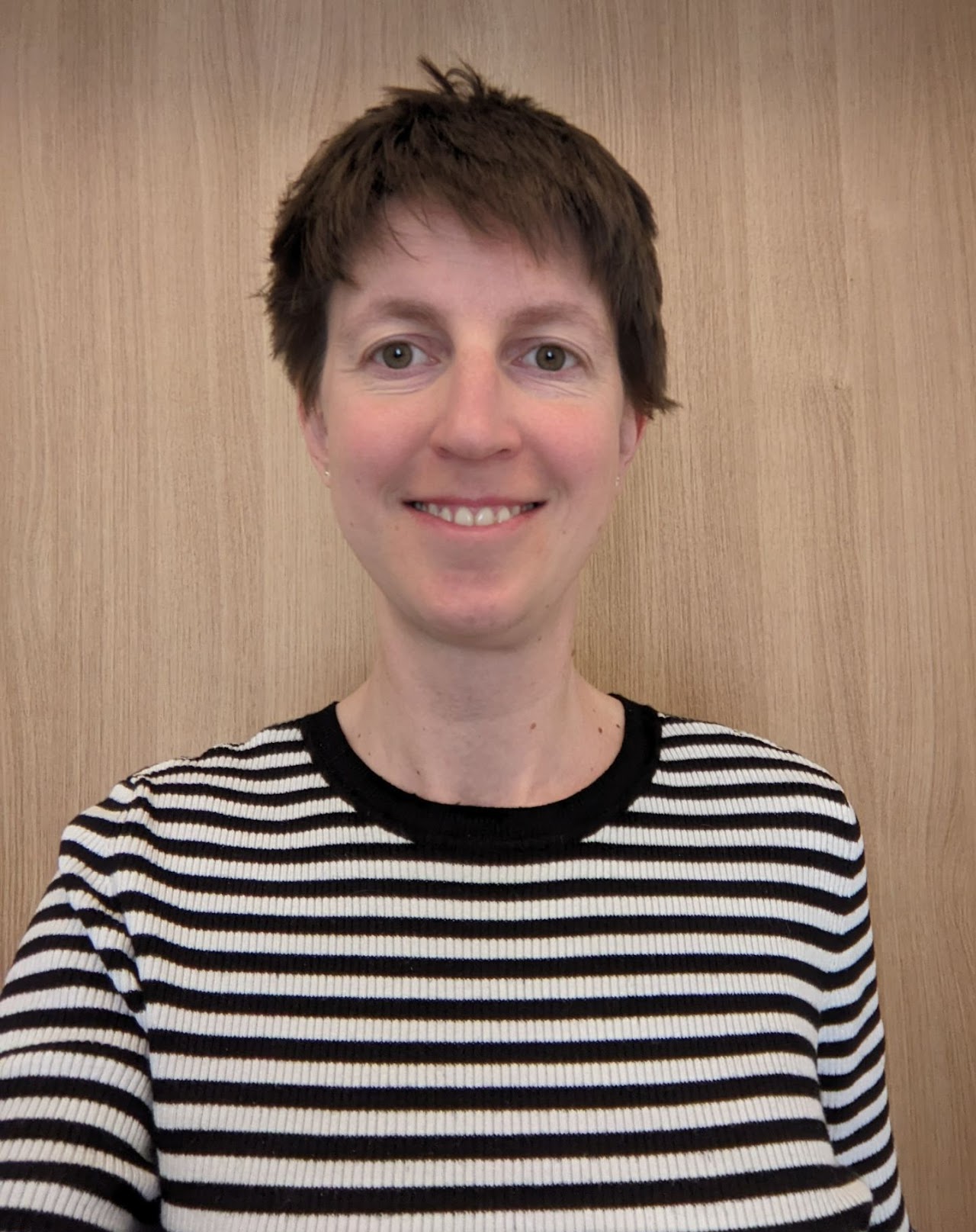
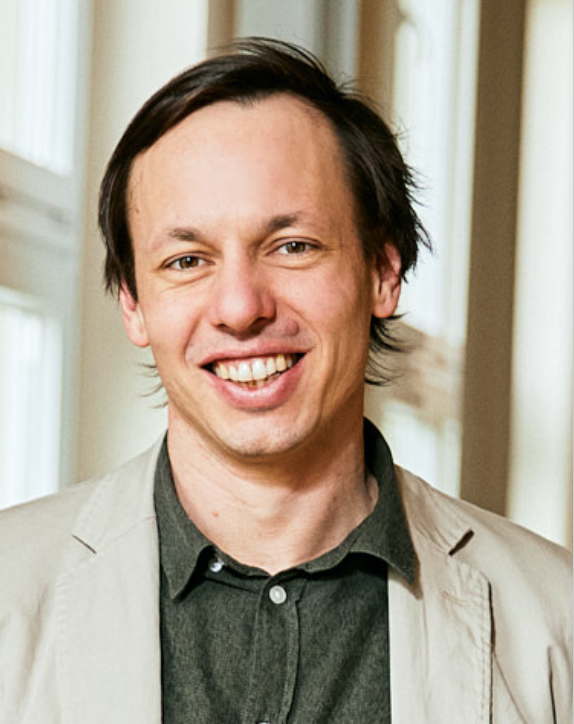
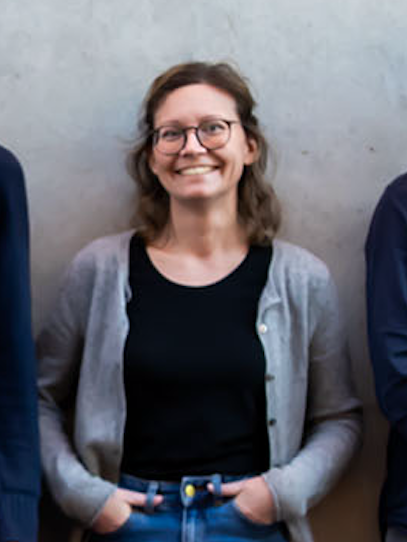
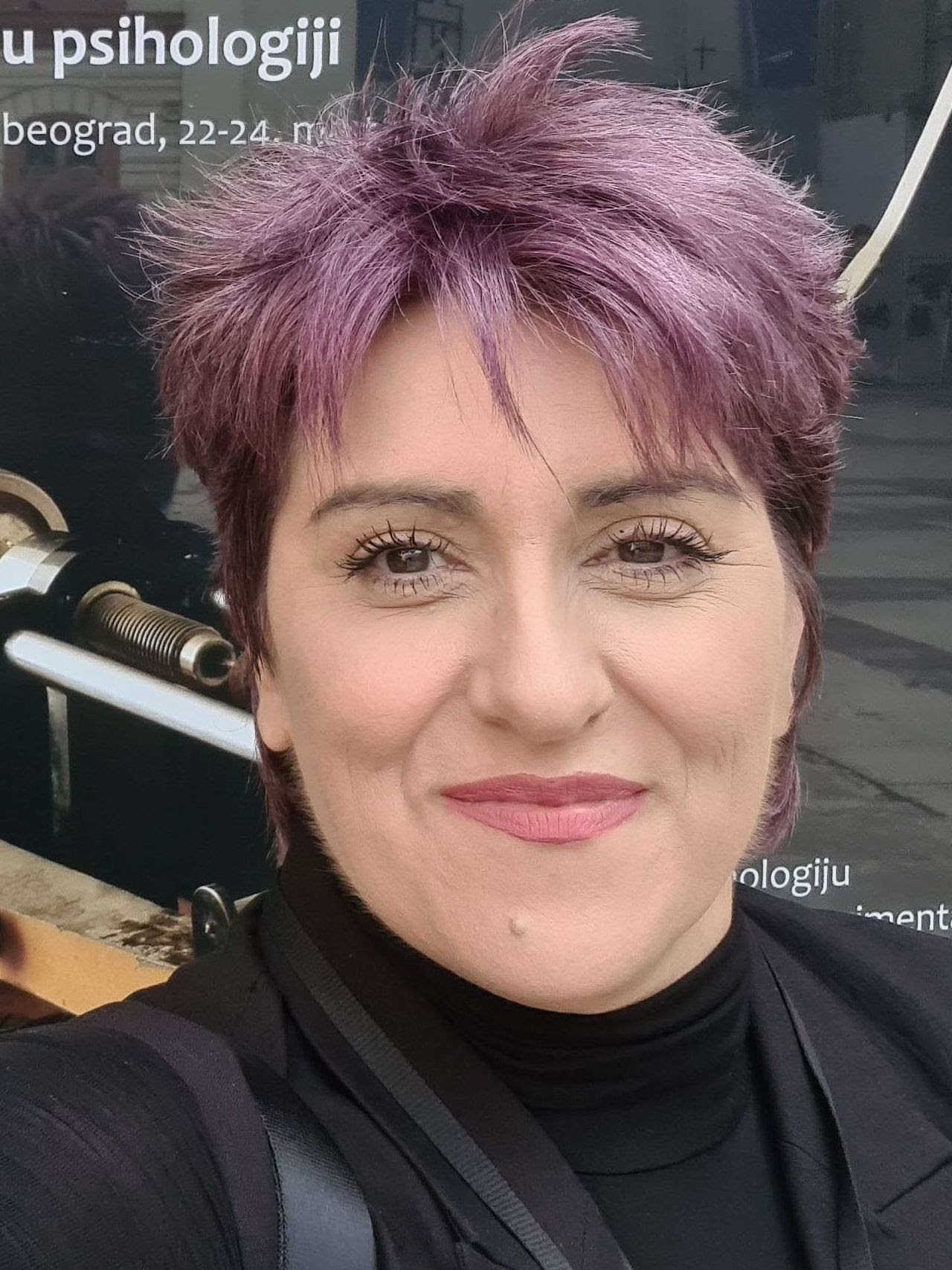
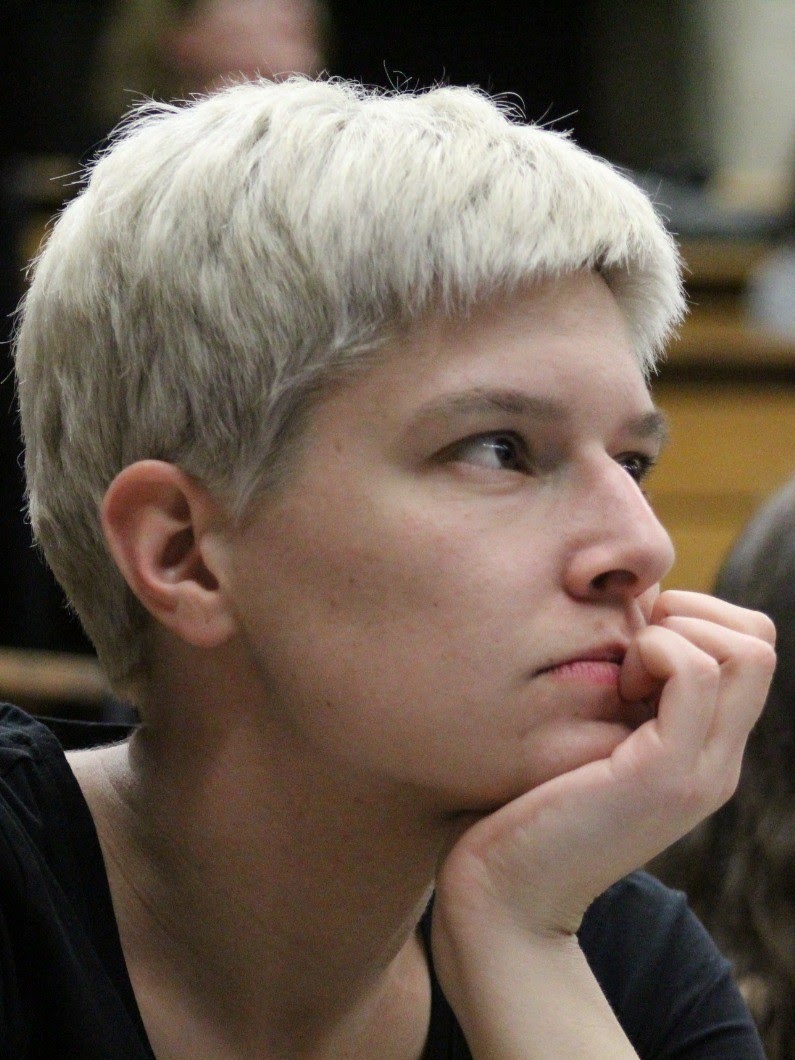
The ease with which people learn to read depends on characteristics of the language, of the specific words that one is reading, and on the cognitive capacities of the individual. In her research, Xenia examines factors on these levels in order to understand how the environmental factors interact with the cognitive capacities to enable fluent reading.
When reading, we extract meaning from script. Benjamin uses computational models of the neuro-cognitive processes in reading, evaluated based on behavioural and neuronal data, to improve/develop individualised diagnostics and interventions to increase reading skills.
As a postdoc in Psycholinguistics, Jana studies cognitive mechanisms of reading. Her focus is on the use of linguistic units in visual word recognition as well as reading in digital contexts.
Tanja investigates how people learn new words, read and switch between languages. More recently, she has also been interested in how different language processes interact with memory.
Dr. Dave Kenneth Tayao Cayado is a {neuro/psycho}linguist working on morphological processing and reading acquisition. He is currently a British Academy Postdoctoral Research Fellow in the Rastle Lab at Royal Holloway, University of London's Department of Psychology.
The properties of the cognitive system shape the structure of language. Dušica is trying to understand how language relates to learning and memory by focusing simultaneously on intra-linguistic distributional information and the links between language and perceptual experience. Her research is guided by the desire to describe and understand the immense sensitivity of the cognitive system to probabilities in the environment in general and language in particular.
Wanlu is interested in the cognitive and neural mechanisms of reading using eye-tracking, EEG, and computational modeling, focusing on reading difficulties (e.g., dyslexia) across alphabetic (English, German) and logographic (Chinese) scripts. Her work aims to inform evidence-based teaching strategies, early interventions, and diagnostic tools to support reading development.
DIPF|Leibniz Institute for Research and Information in Education, Germany
Alexandra is currently an associated scientist at the DIPF | Leibniz Institute for Research and Information in Education in Frankfurt. By training, she is a clinical linguist and a psychologist with a specialisation in school psychology. Her research interests focus on reading and language development, learning, emotion as well as teacher education. She is an experienced project coordinator for citizen science projects and gives university courses to student teachers.
Jack is interested in using computational modelling to understand the cognitive and neural bases of word recognition, reading, and language processes. His work focuses on understanding the orthographic and visual processing of letters and words. He is currently based in the Lab for Cognitive Neuroscience at Goethe University Frankfurt with Christian Fiebach.
Sara is currently conducting her research as a junior research assistant at the Laboratory for Experimental Psychology in Belgrade, Serbia. She is interested in understanding how the idea of the importance of perceptual information postulated by models of embodied cognition fits with the traditionally understood idea of mental representation. In dealing with this issue, she exploits the ambiguity of words.
Anna is a Chinese language teacher in Hong Kong primary and secondary schools by training. In the hope of bridging education and research, she furthered her studies in psychology and the learning sciences. Her work revolves around the subtypes of developmental dyslexia across languages, psychometrics in psycholinguistics, and the philosophy of language.
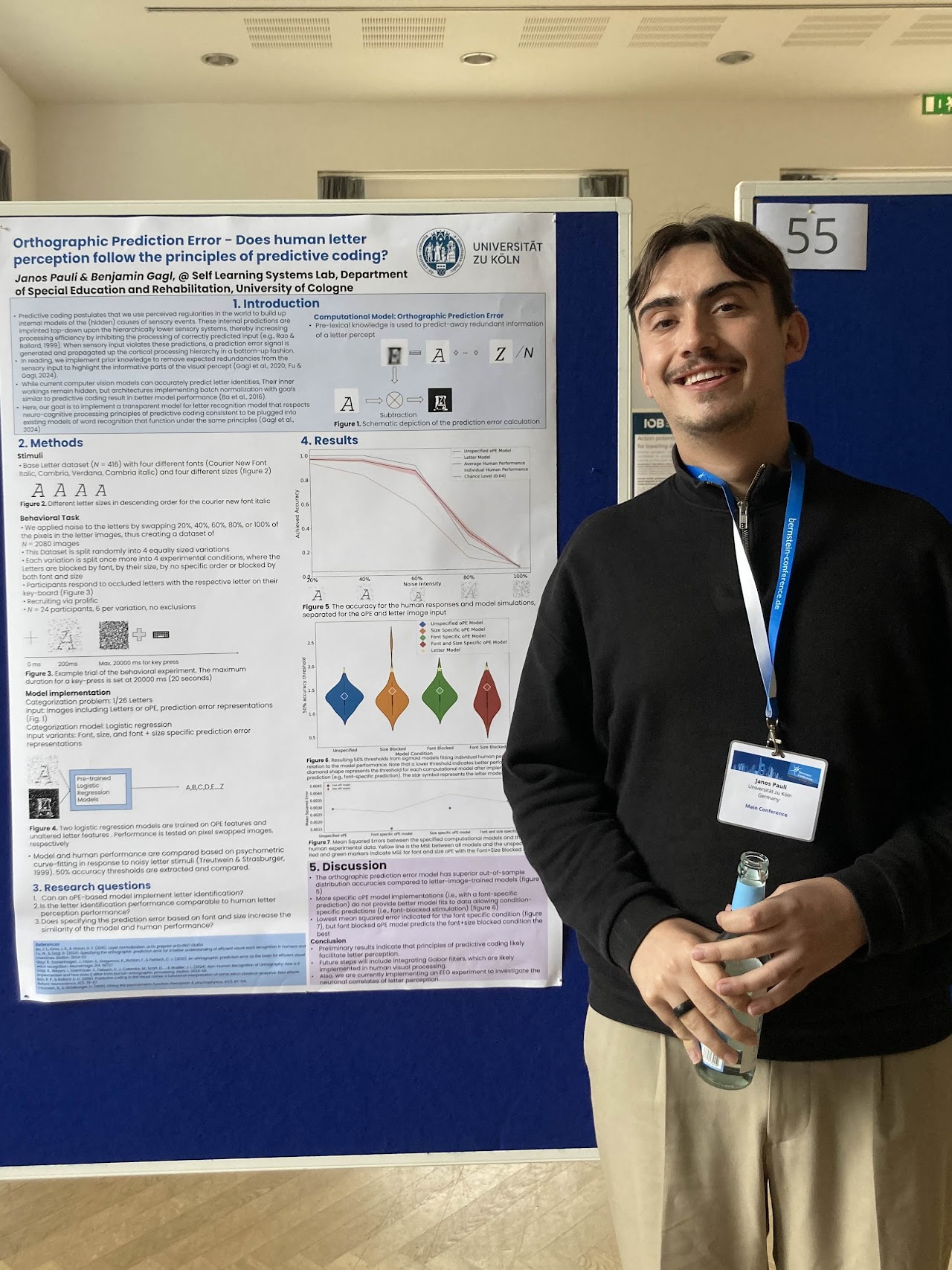
Janos is a PhD student working at the Self Learning Systems Lab. He studies the neuro-cognitive aspects of visual letter and word perception by combining computer vision models, neuroimaging data, and machine learning techniques.
Matilde is currently a PhD student working under the supervision of Tanja Roembke. She is interested in word learning, sometimes with the help of eye-tracking, especially in bilingual populations.
Hanna is currently contributing as a research assistant at the Self Learning Systems Lab at the University of Cologne, where she gets to engage in impactful projects in the field of computational linguistics and cognitive science. She is also a doctoral student with a focus on computational linguistics and discourse studies.